Blog Oficial de Turismo de Gran Canaria

‘Dedo de Dios’ in Agaete

El Dedo de Dios and the Roque Partido: Two names for the same symbol

The rock formation at the Port of Las Nieves, in Agaete lost its pinnacle in 2005, yet it still preserves the beauty of nature’s great works of art.

In Agaete it was always called the Roque Partido (‘Broken Rock’). Dedo de Dios (‘God’s Finger’) was the name given to it by Domingo Doreste, also known as Fray Lesco, the same man who spoke of Gran Canaria as a continent in miniature. This rock formation truly has something divine about it, it always has. We felt it twenty-five years ago, before tropical storm Delta brought down its upper pinnacle, and we still feel it now, in the shapes being created by the erosion of wind and ocean.


(copy 2)

Molino Quemado of Mogán

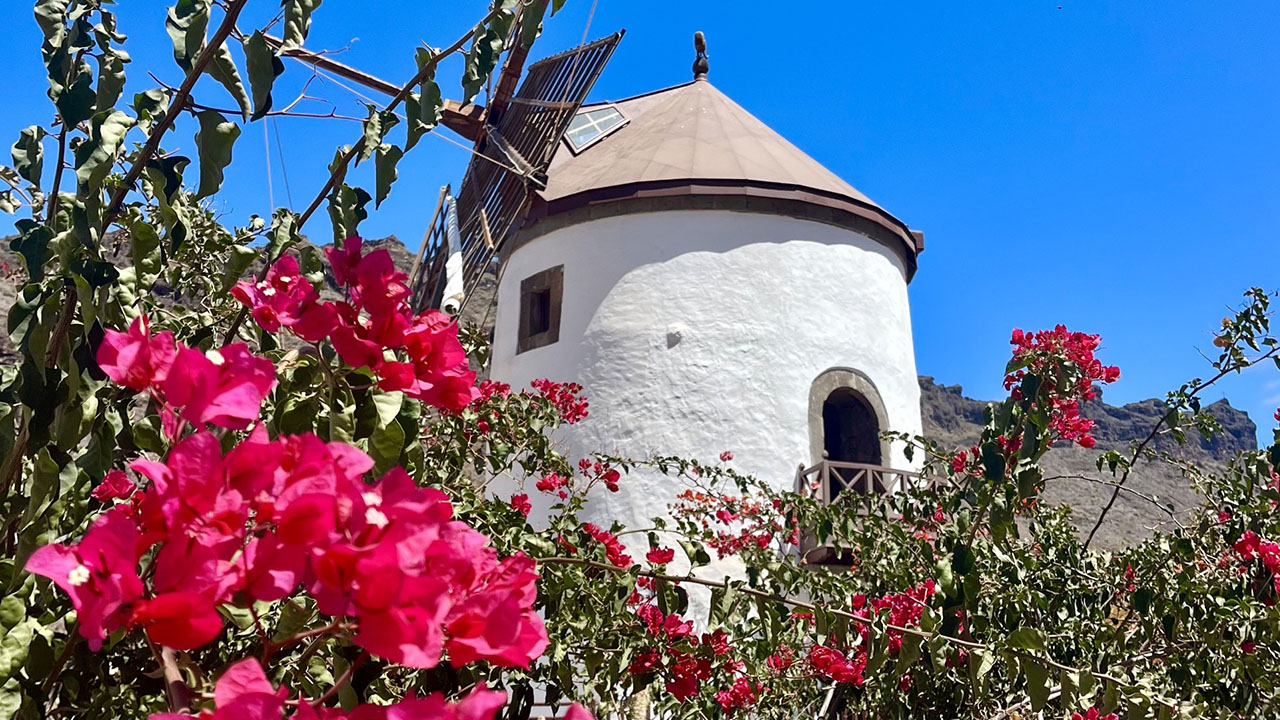
Molino Quemado, a Journey into Gran Canaria’s Milling Tradition

The new Cereal Interpretation Centre of Mogán also features a local dining area, water channels, plantations, and informative panels.

Some buildings leave a lasting mark on the landscape. The Molino Quemado of Mogán is one of those landmarks that always catches the eye with its imposing presence and beauty. Fortunately, we can now do more than admire it from the outside — we can step inside and explore it, embarking on a journey into the island’s milling heritage. Not only do the informative panels detail the features of this 19th-century mill, which played a key role in the agricultural and economic life of Mogán and its surroundings, but they also introduce us to the various types of mills that once existed, the grains that were milled, and the workings of the machinery that so many people on Gran Canaria depended on.

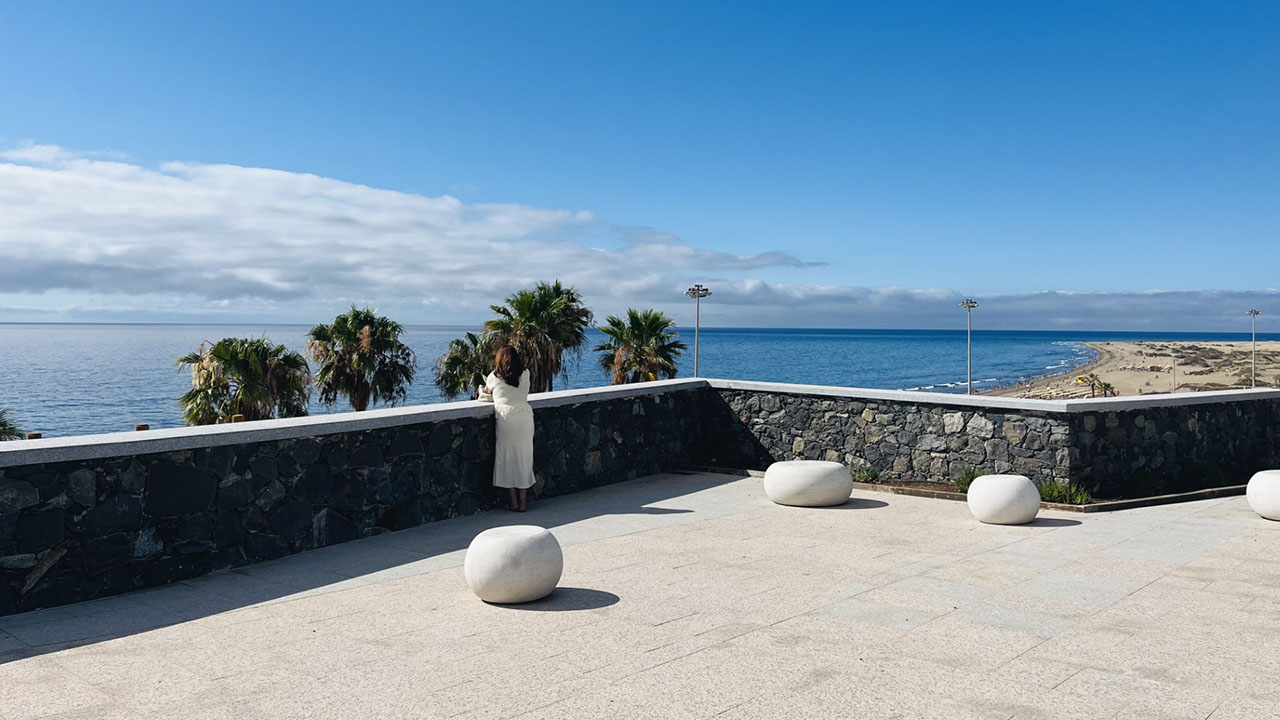
Person taking photos at the viewpoint in Playa del Inglés

A Fresh Perspective on Playa del Inglés and the Maspalomas Dunes in Gran Canaria

The new viewpoint, surrounded by numerous native plants, has become a fresh attraction in the tourist area of Gran Canaria.

The view of Playa del Inglés and Maspalomas is one of Gran Canaria’s most iconic tourist and scenic landmarks. When arriving from the airport or the island’s capital, there comes a moment when you encounter one of those unforgettable landscapes—remarkable for its beauty, its sheer scale, and the sight of dunes that flow into a golden shoreline stretching as far as the eye can see. As Néstor Álamo’s song Maspalomas y tú says, “Down there in the South, asleep under the sun, there’s a beach,” with golden sand and a dazzling ocean—whether viewed from the shore or afar. The recently inaugurated viewpoint, accessible from the Veril area between the Anexo II Shopping Centre and the Costa Canaria Promenade, provides just such a vision: calm, peaceful, and with the perfect perspective of one of the most beautiful coastlines on the planet.


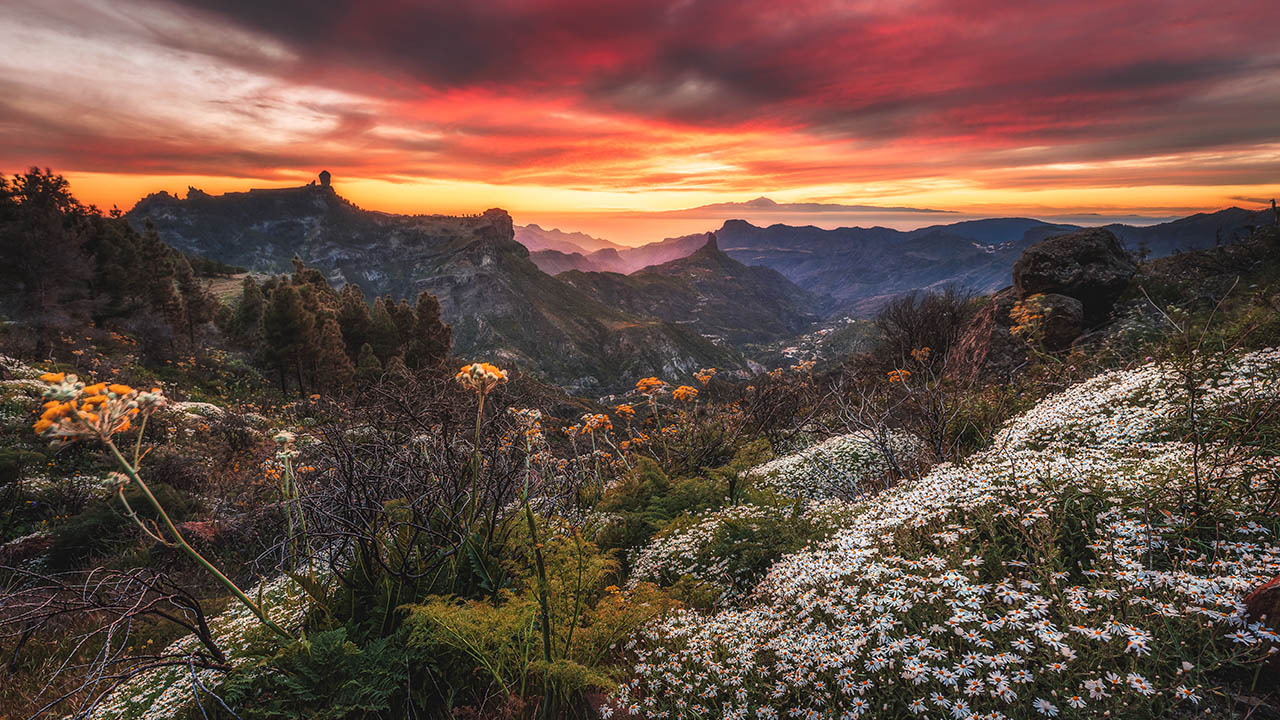
Roque Roque Bentayga seen from Degollada de Becerra viewpointvisto desdel Mirador Degollada d

Degollada Becerra Viewpoint: A Grand Window onto a Unique Landscape in Gran Canaria

The Degollada Becerra Visitor Centre Opens Its Doors to the Public.

Situated within the Biosphere Reserve near the Degollada de Becerra Viewpoint, this Visitor Centre invites you to embark on a unique journey through the island’s geological history, while enjoying one of the most spectacular panoramic views of the Tejeda basin. This privileged location offers breathtaking views of two majestic volcanic monoliths, known as the “Guardians and Children of the Volcano”: Roque Nublo and Roque Bentayga.


Instagram